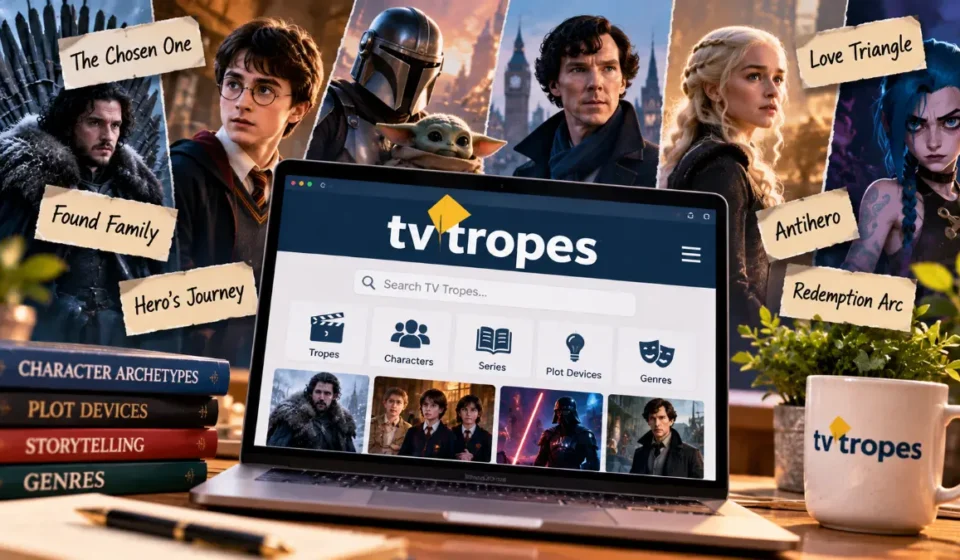

TV Tropes is a community-driven wiki that documents recurring storytelling patterns, character archetypes, plot devices, and conventions found in television shows, movies, books, anime, and video games. The website helps readers recognize familiar narrative techniques, understand how fictional stories are constructed, and discover connections between their favorite shows.
The TV Tropes website organizes these patterns into interconnected articles containing explanations and examples from popular entertainment. Whether you’re exploring a television series, researching a familiar plot twist, or learning why certain characters resemble one another, the platform makes storytelling easier to analyze.
Unlike traditional entertainment encyclopedias, it focuses on how stories work rather than simply summarizing what happens.
What Is TV Tropes?
TV Tropes is an online reference platform where contributors identify, explain, and categorize recurring elements in fiction and popular culture.
Founded in 2004, the project grew out of online discussions among television fans, particularly those interested in Buffy the Vampire Slayer. Its coverage gradually expanded beyond television to include other entertainment formats.
A storytelling trope might involve a reluctant hero accepting responsibility, enemies developing romantic feelings, or an apparently insignificant object becoming important later.
These patterns are not necessarily examples of bad writing. They are recognizable narrative techniques that writers can use, reinterpret, or deliberately challenge.
The central purpose of the platform is to help readers understand how familiar storytelling ideas appear across different fictional works.
How Does the TV Tropes Website Work?
The TV Tropes wiki organizes information through connected articles. Visitors can begin with a particular show or a narrative concept and follow links to related material.
Trope Pages
Trope pages explain specific storytelling patterns and provide examples of where they appear.
For instance, Chekhov’s Gun describes a storytelling principle in which an introduced detail becomes significant later in the narrative.
These pages generally include definitions, explanations, examples from multiple works, and connections to related tropes.
Work Pages
Work pages focus on individual television series, films, books, or games.
Instead of explaining one pattern, they identify numerous tropes appearing within a particular fictional work.
A page about Breaking Bad, for example, may help readers explore character development, moral conflicts, dramatic irony, and recurring narrative conventions.
Related Pages and Media Categories
The website connects concepts through internal links, allowing readers to move between similar patterns or discover examples in other stories.
Its media categories include television, film, literature, animation, comics, and video games.
Some entries also explore individual characters, creators, and narrative interpretations.
Main Features of the TV Tropes Wiki
Several features make the platform useful for exploring fictional storytelling.
| Feature | Purpose |
| Trope pages | Explain recurring narrative patterns |
| Work pages | Identify tropes within specific fictional works |
| Character pages | Explore character traits and archetypes |
| Media categories | Organize entertainment formats |
| Related links | Connect similar concepts |
| Community editing | Allow registered contributors to improve articles |
The most valuable feature is the connection between explanations and examples. Readers can learn a concept and immediately examine how different stories apply it.
This structure also makes the website useful for discovering unfamiliar television shows through shared storytelling elements.
Popular TV Tropes Examples From Famous TV Shows
Many American television series rely on familiar storytelling patterns while presenting them in distinctive ways.
| TV Show | Trope or Technique | Recognizable Example |
| Breaking Bad | Anti-Hero | Walter White’s increasingly immoral decisions |
| Friends | Will They or Won’t They? | Ross and Rachel’s complicated romance |
| The Office | Mockumentary | Characters speaking directly to documentary cameras |
| Stranger Things | Ragtag Bunch of Misfits | Unlikely allies confronting supernatural threats |
| Lost | Flashback | Episodes revealing characters’ past experiences |
These examples demonstrate how similar narrative ideas can function across comedy, drama, mystery, and science fiction.
Character Tropes
Character tropes describe recognizable personality types, relationships, and narrative roles.
An anti-hero occupies a central role without consistently demonstrating traditional heroic qualities.
Walter White from Breaking Bad illustrates how a protagonist can become increasingly morally compromised while remaining central to the narrative.
Plot and Relationship Tropes
Plot tropes involve familiar events, conflicts, and developments within a story.
The Will They or Won’t They? pattern creates romantic tension by repeatedly delaying or complicating a potential relationship.
Ross and Rachel’s changing relationship throughout Friends provides a recognizable example.
Storytelling and Presentation Techniques
Some recurring patterns concern how information is presented rather than what happens.
The Office uses mockumentary techniques, including interviews and direct camera acknowledgments, to create humor and establish character perspectives.
Lost frequently uses flashbacks to reveal character histories and change how viewers understand present-day events.
Trope vs. Cliché vs. Genre Convention vs. Storytelling Device
These storytelling terms overlap, but they have different meanings.
A trope is a recognizable pattern appearing across different stories. A cliché is an expression or storytelling element that feels stale or predictable because of overuse or unimaginative execution.
A genre convention is an expected feature of a particular storytelling category. A storytelling device is a technique used to structure a narrative or communicate information.
For example, investigating a crime is a detective-fiction convention. A flashback is a narrative device, while a brilliant detective who routinely breaks the rules represents a recognizable character archetype.
One element can belong to multiple categories. Tropes are not automatically clichés, and familiar storytelling techniques can remain effective when handled creatively.
How to Use TV Tropes to Explore Your Favorite Shows
Getting started is straightforward:
- Open the website: Visit the official TV Tropes homepage.
- Search for a show: Enter a television series title or a familiar narrative concept.
- Explore its page: Read the description and examine the listed storytelling patterns.
- Follow related links: Discover connected tropes and examples from other fictional works.
- Compare different shows: Notice how writers adapt or challenge similar narrative conventions.
For focused research, start with one trope instead of browsing an entire series.
The TV Tropes Glossary can also help readers understand terminology used throughout the community.
Why TV Tropes Is Useful for Viewers and Writers
For television viewers, the platform provides a useful vocabulary for discussing storytelling. It helps explain why certain characters feel familiar or why particular developments create expectations.
Writers can explore common narrative structures, identify predictable approaches, and examine different treatments of familiar ideas.
Students and entertainment enthusiasts may also use the site to compare storytelling techniques across genres.
However, its content is community-written, and some examples involve subjective interpretations. Articles may also reveal major plot developments, so readers should be cautious about spoilers.
For academic work, important factual claims should be independently verified.
Conclusion
TV Tropes helps readers understand the recurring patterns behind television and other fictional storytelling. Its interconnected articles make it easier to explore character archetypes, narrative structures, genre conventions, and familiar plot devices.
Whether you’re analyzing Breaking Bad, revisiting Friends, or investigating a storytelling concept, the website offers a practical way to discover how different stories connect.
Frequently Asked Questions
Is TV Tropes free to use?
Yes. Visitors can browse TV Tropes articles for free without creating an account. Registration is needed for certain community features, including editing, while ordinary reading is publicly accessible.
Is TV Tropes the same as Wikipedia?
No. Wikipedia covers general encyclopedic subjects, while TV Tropes specializes in storytelling patterns and examples from fictional works. Both rely on community contributions, but their purposes and editorial approaches differ.
Does TV Tropes only cover television shows?
No. Although television inspired the site’s original focus, it now covers movies, anime, manga, literature, comics, video games, and other storytelling formats.
Can anyone contribute to the TV Tropes wiki?
Registered users can contribute to eligible articles while following community editing guidelines. Creating entirely new trope entries involves additional review and approval procedures.
Are all television tropes clichés?
No. A trope is simply a recognizable storytelling pattern. It becomes clichéd when its execution feels overly predictable or unoriginal. Familiar conventions can still support compelling, creative stories.
Does TV Tropes contain spoilers?
Yes. Some articles discuss major character developments, plot twists, and endings. Readers who want to avoid spoilers should be careful when browsing pages about unfinished shows.
What is the difference between a trope page and a work page?
A trope page explains one recurring storytelling pattern and lists works that use it. A work page focuses on a particular show, movie, book, or game and identifies its various tropes.