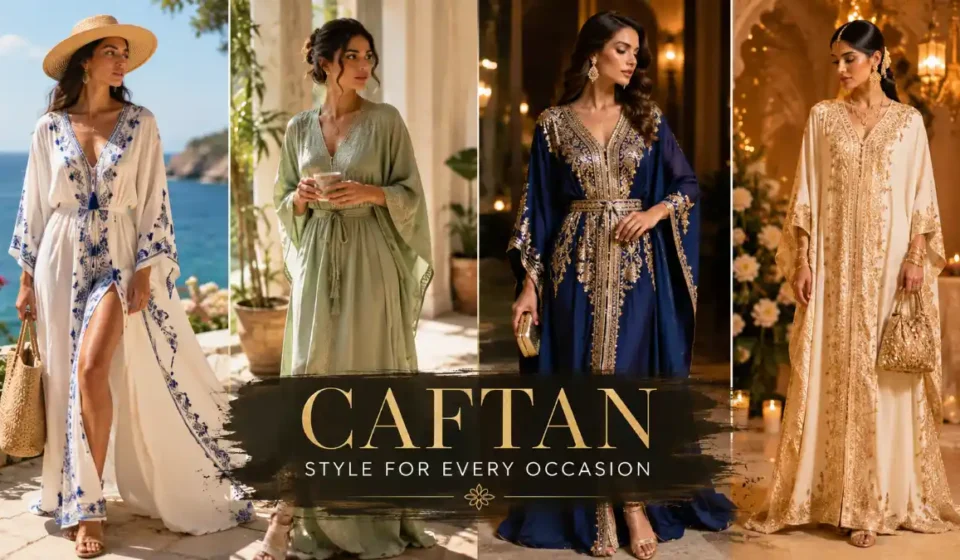

A caftan can be much more than a beach cover-up. With the right fabric, length, accessories, and styling approach, the same flowing silhouette can work for a resort day, casual brunch, travel, dinner, a wedding, or a festive celebration. The key is matching the garment’s visual weight and level of detail to the occasion rather than treating every style the same.
Whether you are choosing a caftan dress, building a vacation outfit, or looking for a more polished caftan outfit, this guide explains how to make the silhouette work across different settings without sacrificing comfort or personal style.
How Do You Style a Caftan?
The easiest approach is to start with the occasion, then choose the fabric, length, and accessories. Lightweight cotton, linen, voile, and crochet work naturally for beach and casual wear, while silk, satin, velvet, brocade, and detailed embroidery create a more formal effect. A belt can add definition to relaxed silhouettes, while shoes and jewelry help determine whether the final outfit feels casual, polished, or festive.
| Occasion | Best Fabric Direction | Styling Approach | Footwear |
| Beach or resort | Cotton, voile, crochet | Minimal accessories, relaxed fit | Flat sandals |
| Casual daywear | Cotton, linen, rayon | Belt, crossbody bag, simple jewelry | Sneakers or sandals |
| Smart-casual | Cotton-silk blends, structured fabrics | Defined waist, refined accessories | Block heels or wedges |
| Evening | Silk, satin, refined fabrics | Clutch, statement jewelry | Heeled sandals or pumps |
| Wedding or festive | Velvet, brocade, embellished silk | Controlled embellishment, formal accessories | Formal heels |
| Cooler weather | Velvet, brocade, heavier blends | Layer over fitted pieces | Ankle boots or closed shoes |
Read More: Caftan
Beach and Resort Caftan Styling
For the beach, comfort and airflow should come before structure. A lightweight beach caftan in cotton, voile, or crochet can be worn easily over swimwear without making the outfit feel overly dressed.
Keep the accessories simple. Flat sandals, a straw or raffia bag, sunglasses, and a wide-brimmed hat create an effortless resort combination. Minimal jewelry also works well, particularly when the fabric is sheer, textured, or patterned.
An open-front style is especially practical because it can be removed quickly and layered over swimwear. Short and mid-length options are also convenient when walking between the beach, pool, and nearby restaurants.
For a more elevated resort look, choose a solid neutral or a controlled print and add leather sandals and a structured bag. The result still feels relaxed but looks more intentional than a purely functional cover-up.
Everyday Caftan Outfits
A relaxed caftan outfit can work for errands, brunch, casual lunches, travel days, and other situations where comfort matters but pajamas or traditional loungewear would feel too informal.
The simplest way to give a loose silhouette more definition is to add a belt or fabric sash. Cinching the waist changes the proportions without removing the relaxed character of the garment.
For daytime styling, try:
- A cotton or linen caftan with white sneakers
- A shorter version with flat leather sandals
- A belt with a simple solid-color design
- A crossbody or shoulder bag
- Small hoops, a pendant, or understated bracelets
A denim jacket can also work over shorter or mid-length styles when the weather is cooler. If the garment already has a bold print or decorative neckline, keep the rest of the outfit relatively restrained.
Travel-Friendly Styling
A versatile caftan can earn its place in a travel wardrobe because one garment can serve several purposes. A mid-weight style can be worn casually during the day and then restyled for dinner with different shoes, jewelry, and a bag.
Instead of packing several occasion-specific pieces, consider choosing one relatively neutral design that works with multiple accessories. A simple belt can change the silhouette, while switching sneakers for sandals or heels can immediately alter the formality.
For travel, prioritize:
- Fabrics that are comfortable for extended wear
- A length that is easy to walk in
- A versatile color or understated print
- A silhouette that works with both flat and elevated footwear
- Easy-to-pack accessories that can change the overall look
The most useful travel piece is not necessarily the most elaborate one. It is the one that can move between different settings without looking out of place.
Smart-Casual and Daytime Event Styling
For a garden party, daytime celebration, lunch event, or polished brunch, move away from very sheer beach fabrics and choose a more structured material.
A cotton-silk blend or another medium-weight fabric can give the outfit more presence without making it look excessively formal. A belt helps establish shape, while block heels or wedges provide a polished finish without the intensity of evening footwear.
This is also a good setting for subtle prints, muted florals, earthy tones, and sophisticated patterns. Accessories can be slightly more noticeable than they would be for casual wear, but there is no need to combine multiple statement pieces.
The goal is balance: enough structure and refinement to look intentional, while retaining the ease that makes the silhouette appealing.
Read More: Caftan
Evening Caftan Styles
For dinner, receptions, and semi-formal evening occasions, fabric and finish become increasingly important. Silk and satin can create a fluid, polished appearance, while deeper colors and controlled embellishment add visual richness.
A long caftan dress in a single strong color can create an elegant foundation. Black, deep burgundy, emerald, navy, and other rich shades can provide a more evening-oriented appearance, although the final effect still depends on the cut, fabric, and styling.
Complete the look with:
- Heeled sandals or refined pumps
- A clutch or small structured bag
- Statement earrings or a necklace
- A defined waist when the silhouette benefits from it
- Subtle embroidery or carefully placed embellishment
If the garment already contains significant embroidery or beadwork, reduce the amount of competing jewelry. A polished evening outfit usually benefits from one clear focal point rather than several competing ones.
Wedding Guest and Festive Caftan Outfits
Wedding celebrations and festive occasions allow for richer fabrics, more detailed finishing, and stronger accessories. An embroidered caftan can work particularly well when the event calls for an elevated traditional or occasion-focused appearance.
Velvet, brocade, embellished silk, beadwork, sequins, and detailed embroidery can all increase the visual formality of an outfit. The important consideration is proportion. When the garment itself carries substantial decoration, accessories should support rather than compete with it.
For a wedding guest or festive look, consider:
- A richly finished long silhouette
- Refined formal heels
- A structured clutch
- Gold or other coordinated jewelry
- Controlled rather than excessive layering of accessories
A Moroccan caftan may also be appropriate when you specifically want a more traditional, ceremonial-inspired look. Styling should respect the character of the garment rather than treating elaborate traditional dress as ordinary casualwear.
When attending a wedding, also consider the event’s dress code and cultural setting. Formality is not determined by embellishment alone.
Winter and Cold-Weather Styling
Although many people associate this garment with warm destinations, heavier caftan styles can transition into cooler weather when layered thoughtfully.
For an open-front design, wear a fitted turtleneck, long-sleeve top, slip, or other streamlined base underneath. Depending on the cut, trousers or tights can provide additional coverage. Ankle boots can then replace sandals, while a structured coat can be added for outdoor wear.
Heavier fabrics such as velvet and brocade naturally have more visual weight and can feel better suited to cooler seasons than extremely lightweight voile or chiffon.
The key is avoiding excessive bulk. Because the outer silhouette is already generous, fitted layers underneath generally create a cleaner proportion than several oversized layers.
Choosing the Right Length and Fit
Fit is less about making the garment tight and more about controlling proportion. A flowing silhouette is part of the appeal, but the wrong length or excessive volume can make an outfit appear heavier than intended.
Consider these adjustments:
- Petite frames: Midi or shorter lengths can be easier to balance, while floor-length styles may benefit from heels.
- Tall frames: Long and floor-length silhouettes can emphasize height effectively.
- Defined waist: A belt or sash can highlight the natural waist without changing the garment.
- Longer torso: V-necks and open-front designs can create additional visual length.
- Sheer fabrics: A fitted slip or camisole can create a cleaner base layer.
- Wide sleeves: Slightly pushing sleeves upward can make daytime styling feel more relaxed.
There is no single universally “correct” cut. The best option depends on height, proportions, desired coverage, comfort, and the setting where you intend to wear it.
Read More: Caftan
Fabric Guide: Which Material Works Best?
Fabric changes both the appearance and practicality of a caftan.
Cotton: Breathable, versatile, and well-suited to casual and warm-weather wear. It can wrinkle more readily than some synthetic or blended fabrics.
Linen: Lightweight and naturally relaxed in appearance. Its tendency to wrinkle can actually complement casual styling.
Chiffon and voile: Very lightweight and useful for resort or layering purposes. Because they can be sheer and delicate, they may require an appropriate underlayer.
Silk: Smooth, fluid, and naturally elevated. It works especially well for evening or formal styling but generally requires more careful handling.
Satin: Creates a polished, light-reflective appearance and can make a simple silhouette feel more formal.
Velvet: Rich, substantial, and visually dramatic. It is better suited to cooler weather and festive settings than hot beach days.
Brocade: Structured and decorative, making it a strong option for formal or traditional-inspired occasionwear.
Fabric should therefore be selected based on both appearance and practical conditions. A beautiful material that is uncomfortable for the climate or activity will rarely become a reliable wardrobe piece.
Colors, Prints, and Patterns by Occasion
Color and pattern can shift the perceived formality of the same silhouette.
Large tropical prints, bright florals, and vacation-inspired motifs naturally suit resort and casual settings. They can be harder to transition into formal evening styling because the print itself establishes a relaxed visual direction.
Solid colors are generally more adaptable. Deep burgundy, emerald, navy, black, bronze, and other rich shades can support evening or festive styling, while sand, olive, blush, rust, cream, and other muted tones work well during the day.
If you want one piece to serve several purposes, a solid neutral or understated earth tone in a medium-weight fabric is a practical starting point. Accessories can then determine whether the outfit looks casual, polished, or more formal.
How to Accessorize Without Overdoing It
Accessories should respond to the amount of visual detail already present.
A plain garment provides room for stronger jewelry. Large earrings, layered bangles, a statement necklace, or an eye-catching clutch can become the focal point.
An embroidered or heavily embellished design needs the opposite treatment. Choose one or two complementary accessories and allow the garment’s craftsmanship to remain visible.
Use footwear strategically as well. Sneakers immediately push a relaxed silhouette toward casualwear, while heels create a more formal direction. Flat sandals reinforce resort or daytime styling, and ankle boots can make a cooler-weather combination feel more grounded.
The goal is not to add more accessories. It is to make each accessory reinforce the intended occasion.
Common Styling Mistakes to Avoid
Several styling choices can make a flowing silhouette look less polished than intended.
1. Adding no definition to a very full silhouette
Not every loose style needs a belt, but a long and voluminous garment can sometimes benefit from waist definition.
2. Mixing incompatible levels of formality
Silk or satin paired with extremely casual footwear can create a confused visual message unless the contrast is deliberate.
3. Ignoring proportion
The right length matters. A hem that drags or overwhelms the wearer can make an otherwise excellent garment difficult to style.
4. Over-accessorizing embellishment
Heavy embroidery, sequins, or beadwork already provides visual interest. Adding multiple statement accessories can create unnecessary competition.
5. Treating every sheer style as a standalone dress
Some lightweight and open designs are intended for layering. A suitable slip, camisole, or other base layer can make the outfit look more intentional.
6. Choosing fabric without considering the climate
Velvet may look beautiful for a winter celebration but become uncomfortable during a hot outdoor event. Fabric should serve the environment as well as the aesthetic.
Read More: Caftan
How to Choose a Versatile Caftan
If you are buying one primarily for versatility, start with the occasions you realistically attend rather than the trendiest design.
A mid-weight, solid-color piece with a simple silhouette is often easier to adapt than a highly specialized beach cover-up or heavily embellished formal garment. A style with enough room to wear comfortably but enough structure to accept a belt gives you additional options.
Before buying, check:
- Fabric composition and weight
- Overall length
- Sleeve volume
- Neckline and front opening
- Seam and hem finishing
- Whether an underlayer is required
- Whether a belt or sash is included
- How easily the piece works with your existing shoes and bags
- Whether the care requirements fit your lifestyle
If you already own several casual pieces, buying a refined evening option may add more value than purchasing another similar beach style. Think about the gap in your wardrobe rather than simply adding another version of the same outfit.
A Simple Caftan Styling Formula
When you are unsure what to wear, use this five-step formula:
1. Identify the occasion.
Beach, casual, smart-casual, evening, or festive?
2. Match the fabric.
Choose lightweight materials for relaxed settings and richer or more structured fabrics for formal occasions.
3. Decide how much definition you want.
Use a belt or sash when you want more waist structure; leave the garment loose when the relaxed silhouette is the point.
4. Match the footwear.
Sneakers and flat sandals keep the look casual, while heels make it more polished.
5. Control the accessories.
Plain fabric can support statement jewelry, while heavily embellished pieces usually benefit from restraint.
This approach removes much of the guesswork because every styling decision has a clear purpose.
Frequently Asked Questions
Can the same caftan work for both beach and evening wear?
Yes, but versatility depends heavily on fabric and construction. A refined silk or cotton-silk design can potentially move between daytime and evening settings, while an extremely sheer beach cover-up will usually remain casual.
What jewelry works best with a plain caftan?
A simple, unembellished style gives you more freedom to use statement earrings, layered bangles, a bold necklace, or a distinctive ring. Choose the focal point based on the neckline and overall silhouette.
Can I wear sneakers with a caftan dress?
Yes. Sneakers are particularly effective with shorter or mid-length casual styles in cotton, linen, or similarly relaxed fabrics. They create a contemporary daytime outfit without sacrificing comfort.
How can I make a loose caftan look less shapeless?
A belt or sash is the quickest option when you want more waist definition. A fitted underlayer can also help create a cleaner foundation when the outer garment is sheer or open-front.
Can I wear a caftan over trousers?
Yes. Open-front designs can work as a flowing outer layer over tailored trousers or jeans. The combination is especially useful when you want the garment to function more like a duster or lightweight coat.
What length is best for a petite frame?
There is no universal rule, but shorter and midi lengths can be easier to balance on a smaller frame. Floor-length styles can also work when the hem is properly adjusted, and the footwear provides enough height and clearance.
Are embroidered caftans suitable for weddings?
They can be, particularly when the fabric, embellishment, and overall finish match the event’s dress code. An embroidered caftan can provide an elegant festive look, but the amount of decoration should be appropriate for the occasion.
How many caftans do I need for a versatile wardrobe?
There is no required number. For many wardrobes, one lightweight casual or resort option and one more refined evening or festive piece provide more versatility than owning several similar designs.
Can I wear a caftan in cold weather?
Yes. Heavier fabrics and thoughtful layering make cooler-weather styling possible. Try a fitted long-sleeve base layer, trousers or tights where appropriate, ankle boots, and a structured outer coat.
What is the difference between open-front and closed-front styles?
An open-front style is generally worn as a layer over separate clothing or swimwear, while a closed-front style can function more like a standalone dress. This distinction affects the underlayer, footwear, and accessories you choose.